Buyers, distributors and overseas importers often decide whether to talk to you after looking at one document: your company profile. If it is vague, outdated or hard to read, they move on. A clear company profile does the opposite, because it answers their first questions before they ask.
This checklist shows what a manufacturer or exporter should include, page by page.
Company profile checklist: what to include
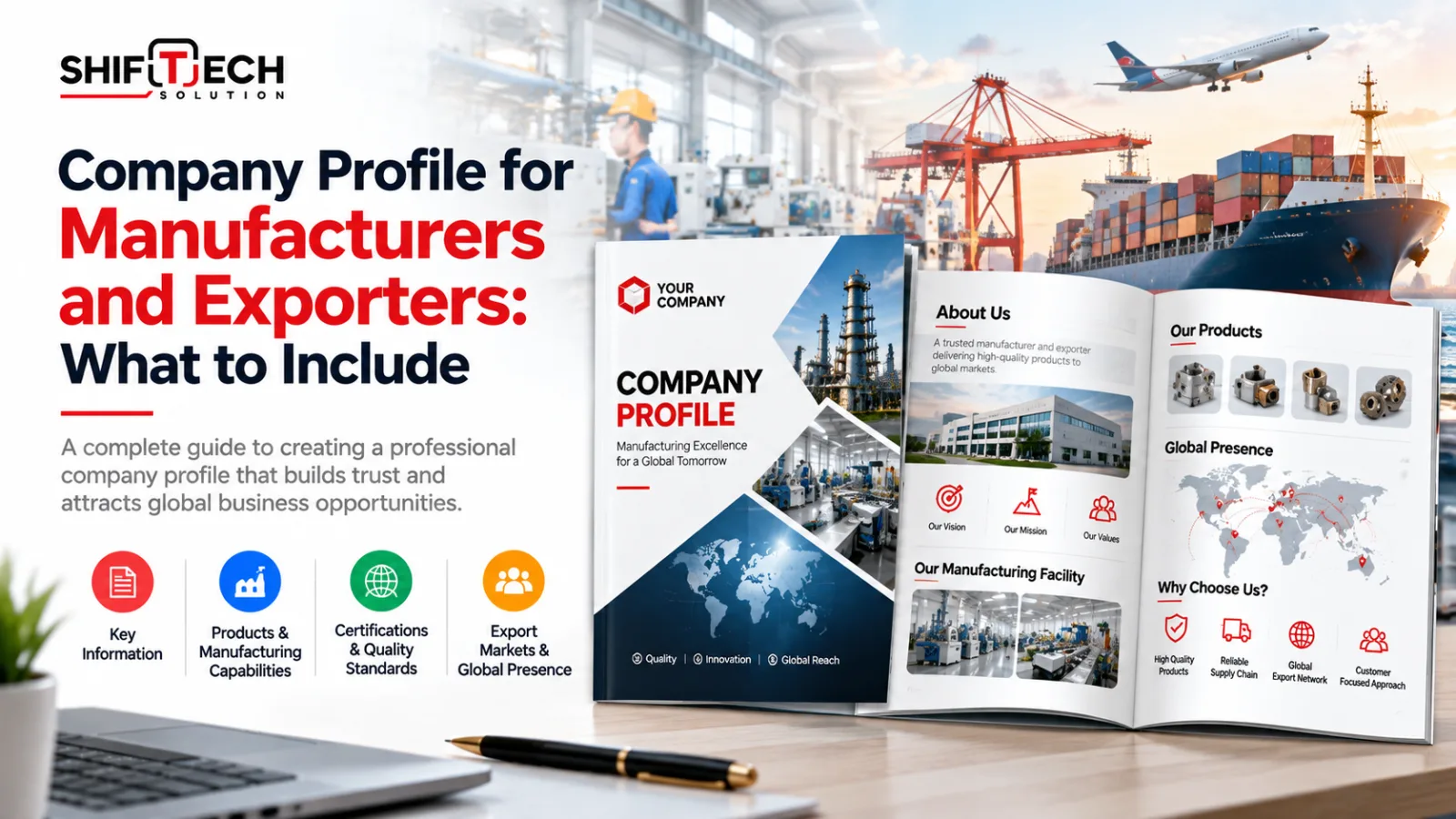
1. Cover page
Your logo, company name, a one-line description of what you do and your website. Keep it clean.
2. About us
Who you are, when you started, where you are based and what you stand for. Write in simple language and keep it to a short paragraph or two.
3. Product range
List your main products with clear photos and short descriptions. Group them into categories so a buyer can scan quickly. If you have a long range, link to a full digital catalogue instead of cramming it all in.
4. Manufacturing capacity and infrastructure
Show your plant, machinery, production capacity and storage. Photos of your real facility build more trust than stock images.
5. Quality and certifications
Mention only certifications you hold, such as ISO standards, GST registration, IEC for exporters or product-specific approvals. Explain your quality checks in a few simple points.
6. Clients and markets
List key clients or the regions you supply to, where you have permission to share them. For exporters, show the countries you serve.
7. Team and leadership
A short introduction to the founders or key people helps buyers see who they will deal with.
8. Why choose us
Three to five specific reasons, for example delivery time, customisation, packaging or after-sales support. Avoid generic claims that any company could make.
9. Contact details
Address, phone, WhatsApp, email and website. Make the next step obvious.
How to write the "About us" section
The About section is read first, so keep it simple. A structure that works well:
- One sentence on what you make or supply and for whom
- One sentence on how long you have been doing it and where
- Two or three sentences on what makes you reliable, such as quality checks, delivery record or customisation
- One closing line inviting the reader to contact you
Avoid phrases like "leading company" or "best quality" unless you can back them up with facts a buyer can verify.
Tailor the profile to your reader
A single profile rarely suits everyone. Adjust the emphasis based on who will read it:
- Domestic distributors care about pricing structure, delivery time, credit terms and after-sales support.
- Overseas importers care about certifications, packaging, shipping experience and export documentation.
- Large buyers and tenders care about capacity, compliance, past supply records and financial stability.
You can keep one master profile and prepare a shorter version for each type of reader.
Design tips
- Use your brand colours and one or two fonts consistently
- Use high-quality photos and plenty of white space
- Keep text short, with headings and bullet points
- Make the file small enough to send on WhatsApp and email
- Add clickable links for your website, email and phone
Common mistakes to avoid
- Writing long paragraphs of company history
- Using low-quality or stock photos
- Claiming certifications you do not have
- Leaving out contact details or putting them on the last page only
- Never updating the profile after new products, clients or certificates
PDF or website page?
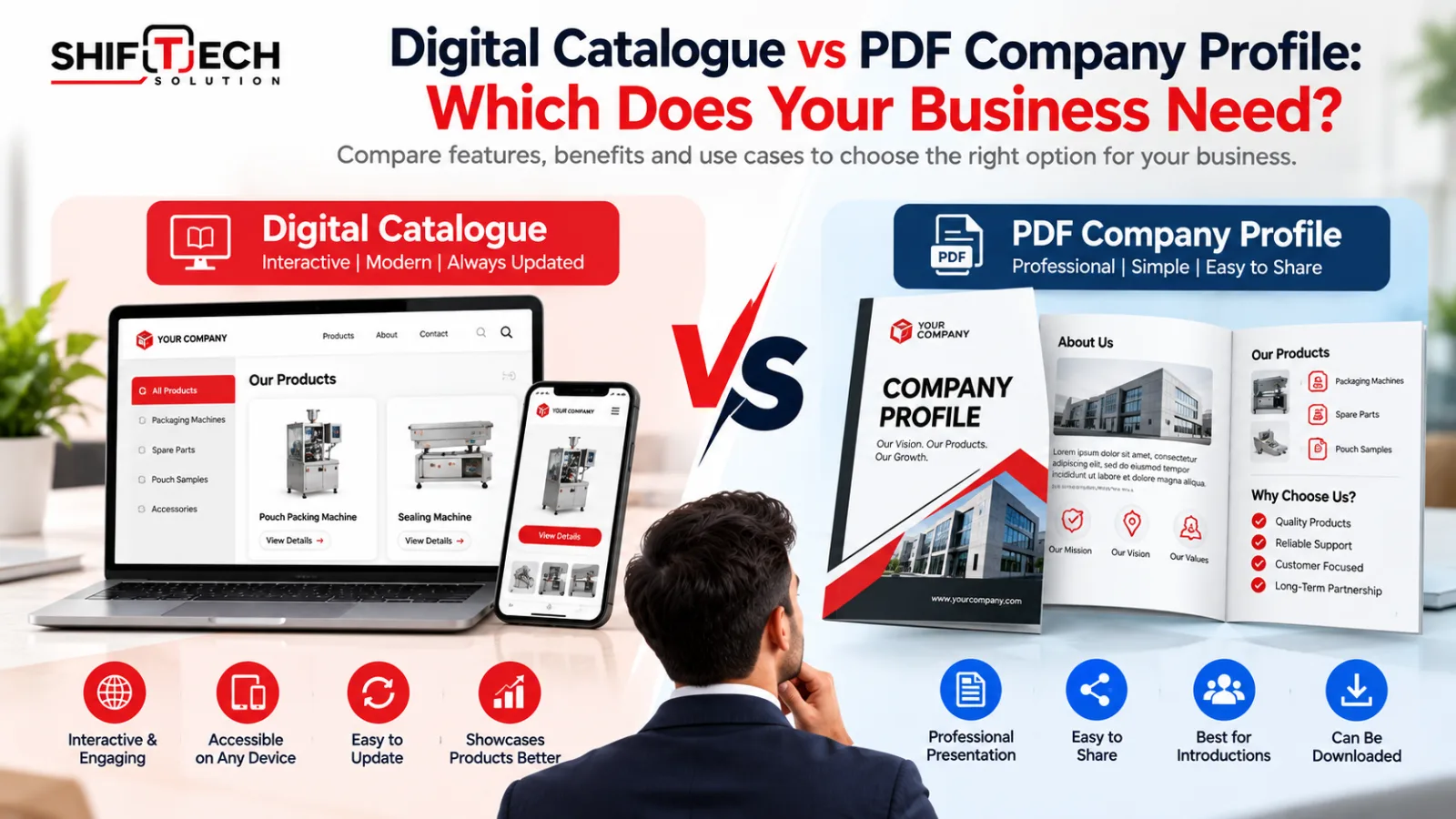
A PDF is convenient to attach to emails, tenders and vendor forms. A web page version helps people find you on Google and lets you update details without resending files. Most manufacturers and exporters benefit from having both.
Need help creating one?
Our team designs company profiles, catalogues and brand material for businesses across Gujarat and India, and can also build a catalogue-style website. See our logo, branding and graphic design service, a manufacturing project like Axzon, or get in touch for a quote.